Jumman Hossain

PhD researcher at UMBC · MPSC Lab · CYPRESS · CARDS (ArtIAMAS program)

Robot learning for reliable autonomy.

Research focuses on reinforcement learning and embodied AI under uncertainty and physical constraints. Learned representations of motion cost, risk, and recoverability guide decisions in navigation and whole-body control.

Current work studies how to use demonstrations selectively for humanoid locomotion and manipulation, manage risk in language-guided navigation, and transfer policies from simulation to physical robots.

Research areas

  • Robot Learning
  • Reinforcement Learning
  • Vision Language Action
  • Robotics
  • Embodied AI
Jumman Hossain
University of Maryland, Baltimore CountyBaltimore, Maryland

I am on the job market and seeking full-time research opportunities in industry and academia. I also welcome collaborations in robot learning and embodied AI.

Updates & milestones

News

Current Research

Explore research
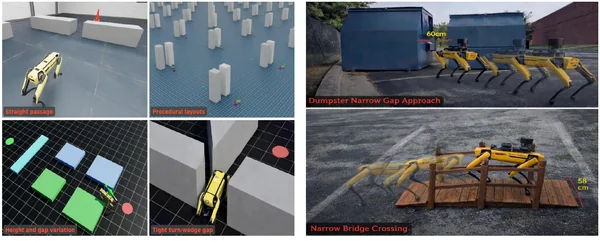
Spot traversing a narrow gap and crossing a narrow bridge.
Embodied AIOngoing research

Reliable language-guided robot navigation

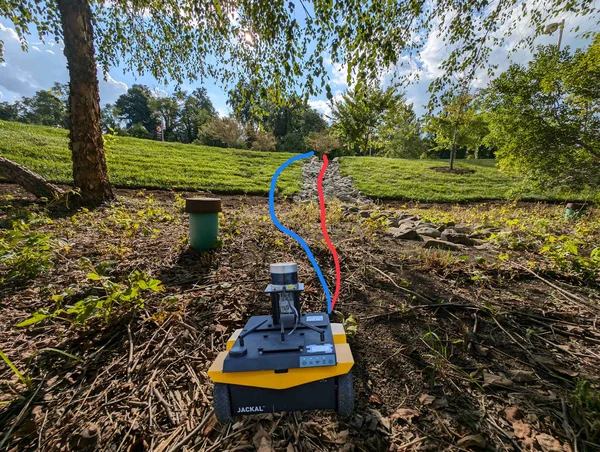
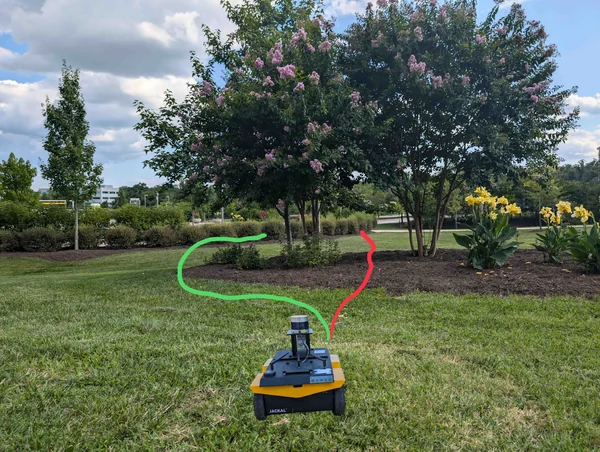
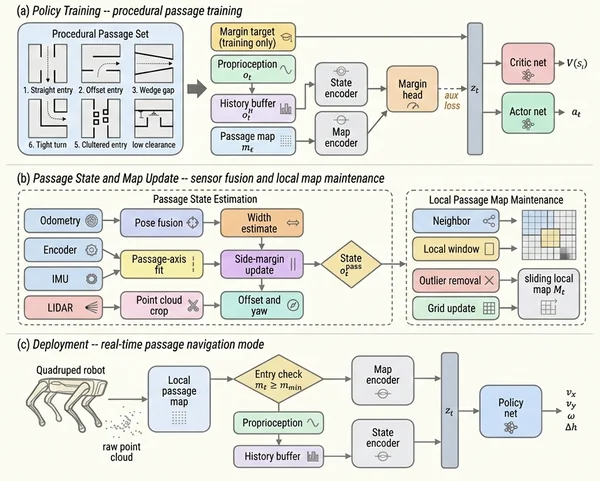
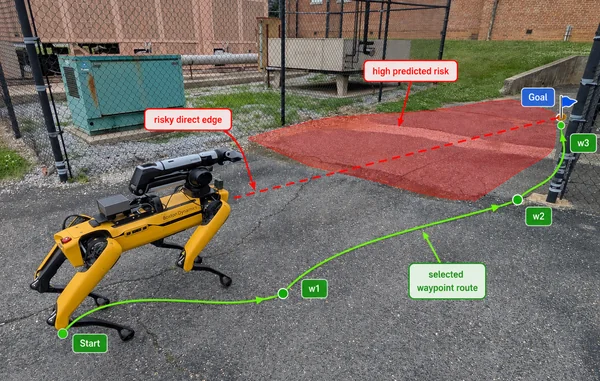
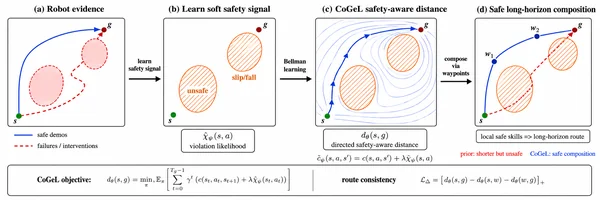
Current research explores language-guided navigation and narrow-gap traversal under uncertainty. Learned risk estimates guide route selection and recovery, while control based on available clearance adjusts body alignment through tight passages. The goal is to connect task understanding with the physical constraints that determine whether a route can be completed reliably.
Humanoid simulation: stair and curb traversal, object pickup, and carrying.
Robot learningOngoing research

Learning whole-body humanoid skills

Current work studies where demonstration guidance matters most for whole-body humanoid learning. Physical margins, required contacts, and predicted near-term failure determine how closely the policy should follow a demonstrated action. Guidance increases in restrictive states and relaxes where reinforcement learning can explore effective alternatives, across tasks such as stairs, object pickup, sitting, and carrying.

Selected Publications

Google Scholar

2026

Learning Anisotropic Value Geometry with Finsler Reinforcement Learning

Jumman Hossain, Nirmalya Roy

ICML 2026

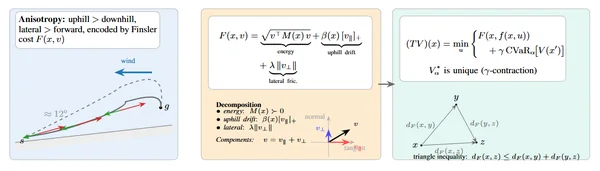
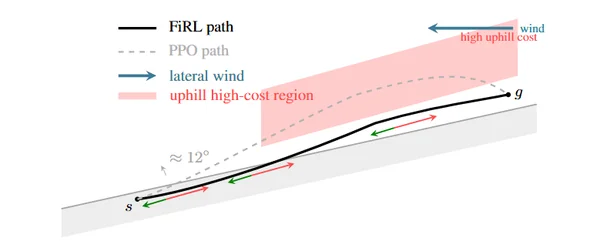
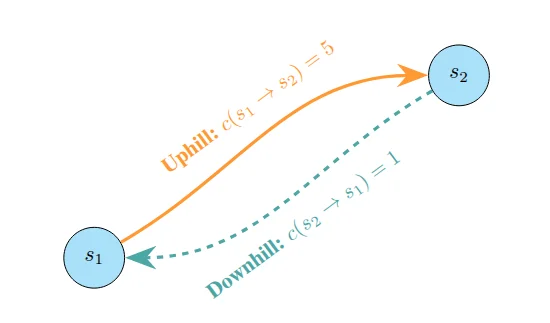
This paper introduces a Finslerian reinforcement learning framework for risk-aware locomotion in environments with asymmetric and anisotropic traversal costs. Instead of treating the cost between two states as a symmetric distance, FiRL models motion using a direction-dependent geometry, where the effort of moving through the environment depends on both the current state and the direction of travel. This is captured through a Finsler-style cost function F(s,s'), enabling the learned policy to represent behaviors and direction-sensitive locomotion risk. We further incorporate tail-risk sensitivity so that the policy does not optimize only for average performance, but also accounts for rare, high-cost failures that are critical in real-world robot deployment.

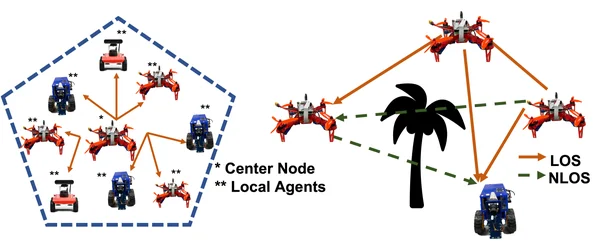
SERN: Bandwidth-Adaptive Cross-Reality Synchronization for Simulation-Enhanced Robot Navigation

Jumman Hossain, Emon Dey, Snehalraj Chugh, Masud Ahmed, MS Anwar, Abu-Zaher Faridee, Jason Hoppes, Theron Trout, Anjon Basak, Rafidh Chowdhury, Rishabh Mistry, Hyun Kim, Jade Freeman, Niranjan Suri, Adrienne Raglin, Carl Busart, Timothy Gregory, Anuradha Ravi, Nirmalya Roy

ICCCN 2026

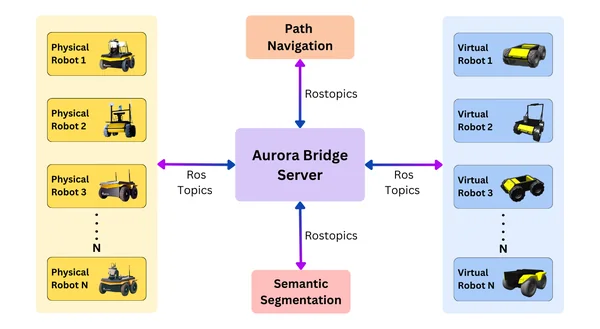
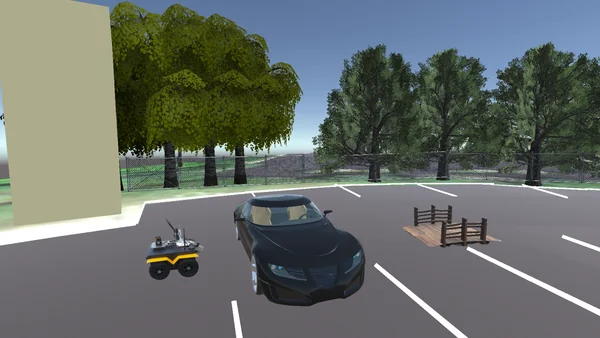
This paper introduces a simulation-enhanced approach for realistic navigation planning in multi-agent robotic systems, optimizing strategies for operations in contested and unpredictable environments.

2025

QPRL: Learning Optimal Policies with Quasi-Potential Functions for Asymmetric Traversal

Jumman Hossain, Nirmalya Roy

ICML 2025

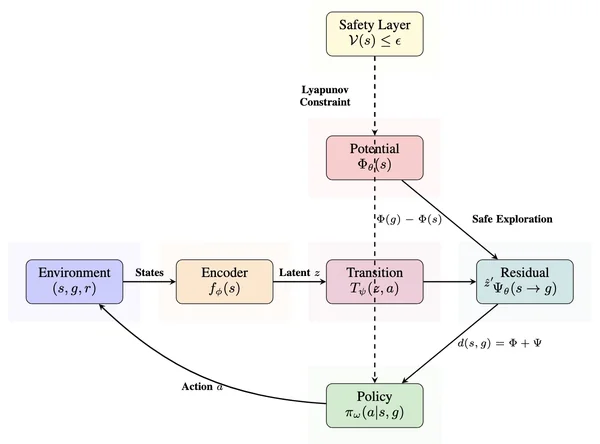
In this work, we address the challenge of modeling asymmetric costs in goal-reaching tasks, where the effort to move between two states can differ depending on direction. We introduce a decomposition of the quasimetric function: d(s, g) = Φ(g) − Φ(s) + Ψ(s → g). The term Φ(g) − Φ(s) captures the path-independent potential difference, representing the global structure of the environment, while Ψ(s → g) encodes the path-dependent residual that models asymmetries and directional effects. This formulation enhances sample efficiency by structuring the learning problem and incorporates a Lyapunov-based safety mechanism that ensures stable and reliable exploration.

2024

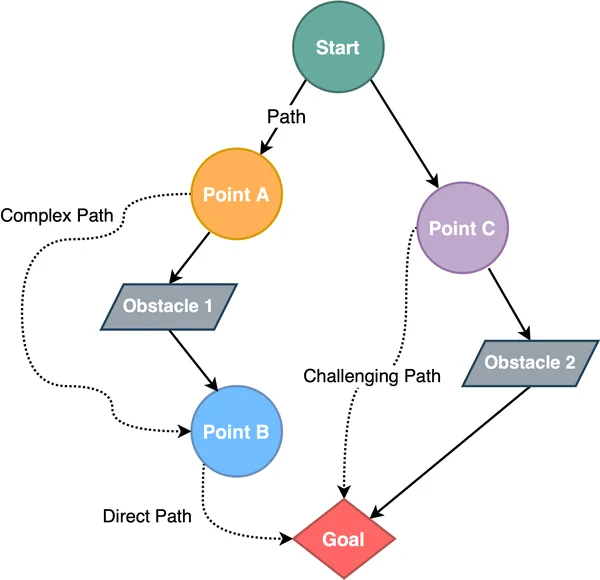
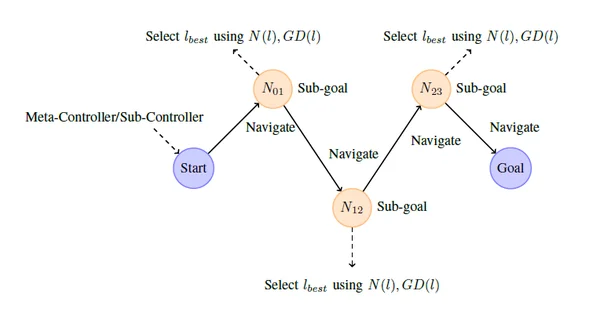
TopoNav: Topological Navigation for Efficient Exploration in Sparse Reward Environments

Jumman Hossain, Abu-Zaher Faridee, Nirmalya Roy, Jade Freeman, Timothy Gregory, Theron Trout

IROS 2024

A navigation framework that leverages hierarchical reinforcement learning (HRL) to enable autonomous robots to efficiently explore unknown areas. By building active topological maps and incorporating intrinsic rewards, TopoNav enhances navigation accuracy and adaptability, especially in sparse-reward environments.

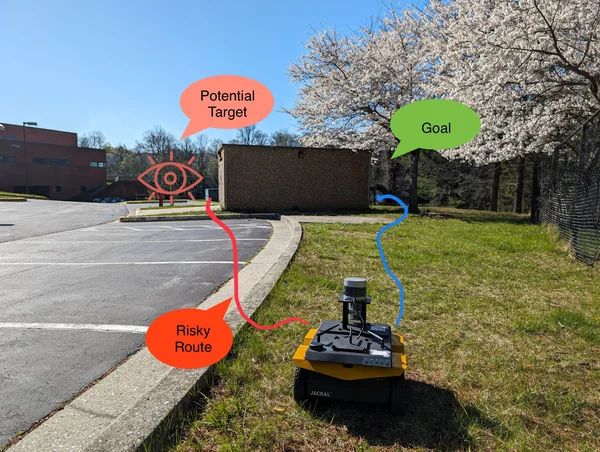
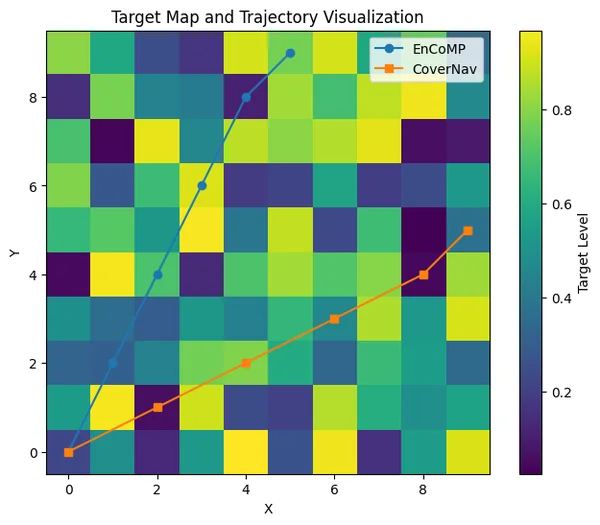
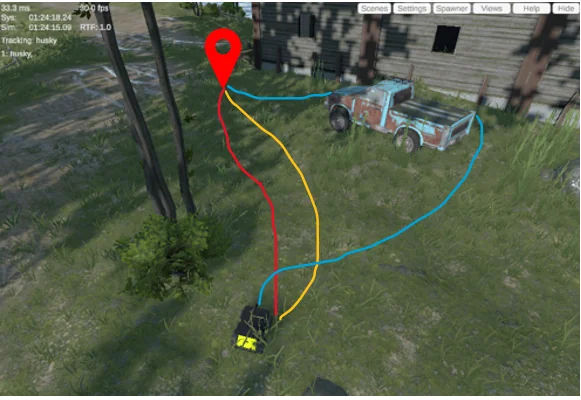
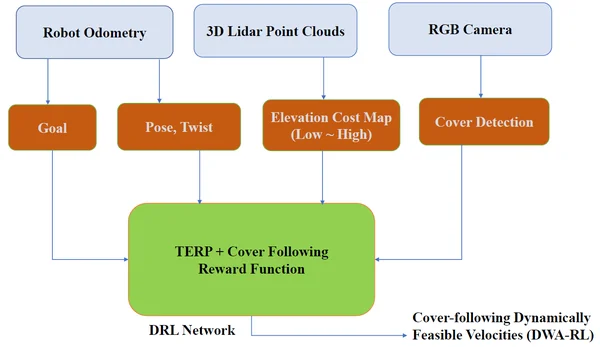
EnCoMP: Enhanced Covert Maneuver Planning with Adaptive Target-Aware Visibility Estimation using Offline Reinforcement Learning

Jumman Hossain, Abu-Zaher Faridee, Nirmalya Roy, Jade Freeman, Timothy Gregory, Theron Trout

ACSOS 2024

This approach enhances maneuver planning by using target-aware visibility estimations and offline reinforcement learning, making it highly suitable for complex and contested environments where maintaining cover is critical.

2023

2022

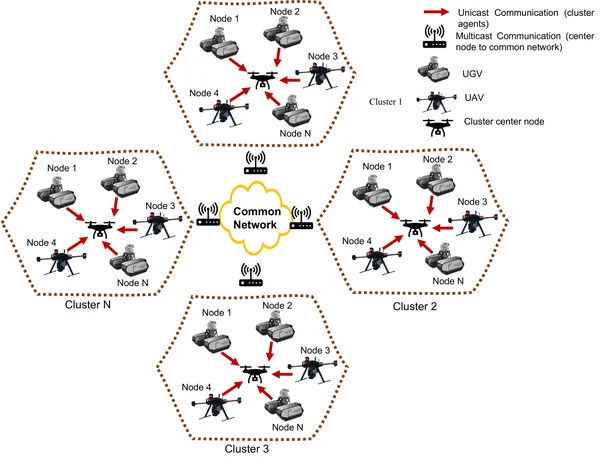
SynchroSim: An Integrated Co-simulation Middleware for Heterogeneous Multi-robot System

Emon Dey, Jumman Hossain, Nirmalya Roy, Carl Busart

IEEE DCOSS 2022

SynchroSim provides an integrated co-simulation middleware that supports coordination and interaction among heterogeneous multi-robot systems. It ensures effective communication and synchronization across diverse platforms, allowing robust development and testing of cooperative robotic applications in dynamic environments.

Under review

Research & background

Experience

Full CV

Research experience

  • Research Assistant

    Center for Research in Use-Inspired Cyber-Physical Systems (CYPRESS)

    University of Maryland, Baltimore County

    Baltimore, MD

    Aug 2025 – Present

  • Research Assistant

    Center for Distributed Sensing and Autonomy (CARDS)

    University of Maryland, Baltimore County

    Baltimore, MD

    Aug 2022 – Aug 2025

  • PhD Research Internship

    Stormfish Scientific Corporation

    Baltimore, MD

    May 2024 – Aug 2024

    Developed reinforcement learning models for navigation and connected ROS-based robots with AuroraXR and Unity simulations.

  • Research Assistant

    Mobile, Pervasive and Sensor Computing Lab (MPSC)

    University of Maryland, Baltimore County

    Baltimore, MD

    Aug 2021 – Present

Industry experience

  • Senior Software Engineer

    BJIT Limited

    Dhaka, Bangladesh

    Oct 2018 – Aug 2021

    Worked on the PockeTalk translation SDK, image translation integration, and the JAJA TV application.

  • Software Engineer

    IPvision Canada Inc.

    Dhaka, Bangladesh

    Sept 2015 – Sept 2018

    Developed distributed cloud storage systems using OpenStack Swift.

  • Software Engineer

    Eyeball Networks Inc.

    Dhaka, Bangladesh

    July 2014 – Aug 2015

    Developed the Android uGrow Smart Baby Monitor application for Philips Avent hardware.

Education

  • PhD candidate, Information Systems

    University of Maryland, Baltimore County

    2021 - present

    Advisor: Prof. Nirmalya Roy. Research in reinforcement learning, robot navigation, and reliable autonomy.

  • MS, Artificial Intelligence and Machine Learning

    University of Maryland, Baltimore County

    2021 - 2023

  • Bachelor of Engineering, Computer Science and Engineering

    Shahjalal University of Science and Technology

    2009 - 2013

    Specialization in machine learning.

Let's talk research.

I am on the job market and seeking full-time research opportunities in industry and academia. I also welcome collaborations in robot learning and embodied AI.

Get in touch